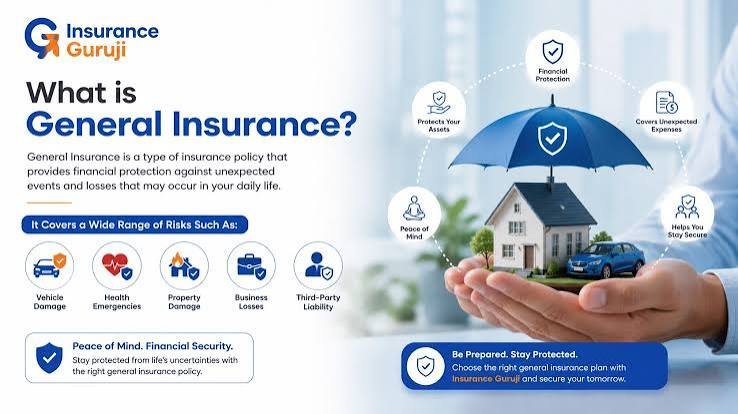
General insurance is a broad category of insurance policies that protect you financially against unexpected losses that are not related to death. Whether it is a sudden hospitalisation, a road accident, a house fire, or a cancelled international flight — general insurance is designed to reduce the financial burden when the unexpected happens.
Unlike life insurance, which pays a benefit upon the death of the insured, general insurance covers risks that occur during your lifetime — to your health, vehicle, home, travel plans, or business assets. Most general insurance policies run for one year and need to be renewed annually to keep the coverage active.
Understanding what general insurance is, what it covers, and how it works helps you build a more complete financial safety net.
Quick Answer: What Is General Insurance?
General insurance refers to non-life insurance policies that provide financial protection against losses caused by accidents, illness, theft, property damage, or other unexpected events. Unlike life insurance, these policies do not cover death benefits. They are typically issued for one year at a time and must be renewed annually to maintain continuous coverage.
What Is General Insurance? The Clear Definition
General insurance, also known as non-life insurance, is a contract between a policyholder and an insurance company. The insurer agrees to compensate the policyholder for specific covered losses in exchange for a premium.
The coverage depends entirely on the type of policy:
- A health insurance policy covers hospitalisation, surgery, and medical expenses
- A car insurance policy covers vehicle damage and third-party liability
- A travel insurance policy covers trip cancellations, lost baggage, and medical emergencies abroad
In India, the general insurance industry is regulated by the Insurance Regulatory and Development Authority of India (IRDAI), which governs policy terms, claim processes, and premium guidelines across all insurers.
General Insurance vs Life Insurance: Key Differences
| Factor | General Insurance | Life Insurance |
|---|---|---|
| What it covers | Health, vehicle, home, travel, liability | Death or survival of the insured |
| Policy tenure | Usually 1 year, renewable | Long-term (10–40 years or whole life) |
| Premium payment | Annual | Annual, monthly, or single premium |
| Claim payout | Reimbursement or direct settlement | Lump sum on death or maturity |
| Common examples | Health, car, home, travel insurance | Term plan, endowment, ULIP |
Both types of insurance serve different purposes. Life insurance protects your family’s financial future if something happens to you. General insurance protects your assets, health, and finances during your lifetime.
Types of General Insurance in India
General insurance covers a wide range of risks. The most common types available in India include:
Health Insurance
Covers hospitalisation costs, surgery, day care treatments, pre- and post-hospitalisation expenses, and in some plans, maternity cover and AYUSH treatments. Available for individuals, families, and senior citizens.
Motor Insurance (Car and Bike Insurance)
Covers financial losses from accidents, theft, fire, natural disasters, and third-party liability. Under Indian law, third-party motor insurance is mandatory for all vehicles on public roads.
Home Insurance
Protects your home structure and household contents from losses caused by fire, flood, theft, earthquake, or storm damage.
Travel Insurance
Covers medical emergencies, trip cancellations, missed flights, loss of baggage or passport, and emergency evacuation when travelling domestically or internationally.
Personal Accident Insurance
Provides financial compensation in the event of accidental death, permanent disability, or temporary disability caused by an accident.
Commercial and Business Insurance
Designed for businesses and covers property, fire, marine cargo, public liability, and other business-related risks.
What Does General Insurance Cover?
While exact coverage depends on the specific policy, general insurance broadly covers:
- Accidental damage to your vehicle, home, or belongings
- Medical hospitalisation and treatment costs
- Natural disaster damage — fire, flood, earthquake, cyclone
- Theft or burglary of insured property
- Third-party liability when your vehicle or actions cause injury or damage to others
- Travel disruptions including trip cancellations and emergency medical evacuation
- Accidental death or disability under personal accident policies
Always review the policy document carefully to understand the sum insured, sub-limits, and applicable conditions.
What Is Not Covered Under General Insurance?
Every general insurance policy includes exclusions — situations where the insurer will not pay a claim. Common exclusions across most general insurance types include:
- Pre-existing illnesses (subject to waiting periods in health insurance)
- Damage intentionally caused by the insured
- Losses from war, nuclear events, or civil unrest
- Wear, tear, or depreciation in motor or home policies
- Driving without a valid licence in motor insurance claims
- Cosmetic procedures or elective treatments in health policies
- Consumable and non-medical expenses in health claims
Exclusions vary by insurer and policy type. Always read the exclusions section before buying a policy.
How Does General Insurance Work?
Here is a step-by-step overview of how a general insurance policy works:
- Choose a policy — select the right type based on your need: health, motor, travel, or home
- Pay the premium — premium depends on sum insured, age, type of cover, add-ons, and risk profile
- Receive the policy document — this outlines coverage, exclusions, and claim process
- Raise a claim — inform the insurer when a covered event occurs and submit required documents
- Claim assessment — the insurer verifies the claim against the policy terms and conditions
- Claim settlement — if approved, the insurer settles directly with the hospital or garage (cashless) or reimburses you after payment (reimbursement)
Why Should You Buy General Insurance?
General insurance is more than a financial product — it is a practical safety net.
- Protects your savings — a single hospitalisation or major accident can deplete years of savings without adequate coverage
- Legal compliance — third-party motor insurance is mandatory for all vehicle owners in India under the Motor Vehicles Act, 1988
- Tax benefits — health insurance premiums qualify for tax deductions under Section 80D of the Income Tax Act
- Peace of mind — financial coverage allows you to handle emergencies without immediate monetary stress
- Affordable premiums — most general insurance policies are available at premiums that are low relative to the financial protection they provide
Frequently Asked Questions
Q. Is general insurance the same as non-life insurance?
Yes, general insurance and non-life insurance refer to the same category. They cover risks other than death and include health, motor, home, travel, and personal accident policies.
Q. Is health insurance a part of general insurance?
Yes. Health insurance is one of the most widely purchased types of general insurance in India. It covers medical expenses from illness, injury, surgery, and hospitalisation.
Q. Is general insurance mandatory in India?
Not all types are mandatory. However, third-party motor insurance is legally required for all vehicle owners. Other types like health or travel insurance are optional but strongly recommended.
Q. How is a general insurance premium calculated?
Premium depends on factors such as the type of policy, sum insured, age, location, risk profile, and selected add-ons. Each insurer applies its own underwriting criteria, so premiums may vary between companies for the same coverage.
Q. Can I hold multiple general insurance policies?
Yes. You can hold a health insurance policy and a motor insurance policy at the same time. In health insurance, you may also be able to claim from multiple policies when costs exceed one policy’s limit, subject to each insurer’s terms and conditions.
Q. How long does a general insurance claim take to settle?
Settlement timelines depend on the policy type and claim complexity. IRDAI mandates defined timelines for insurers. Cashless health claims are often approved within hours, while complex motor or property claims may take longer depending on documentation and assessment.
Conclusion
General insurance is a fundamental part of personal and financial planning. It protects your health, vehicle, home, and travel plans from the financial consequences of unexpected events. Whether you are buying your first policy or reviewing your existing coverage, understanding the types, coverage scope, and exclusions of general insurance helps you choose the right protection for your needs.